
Abstract
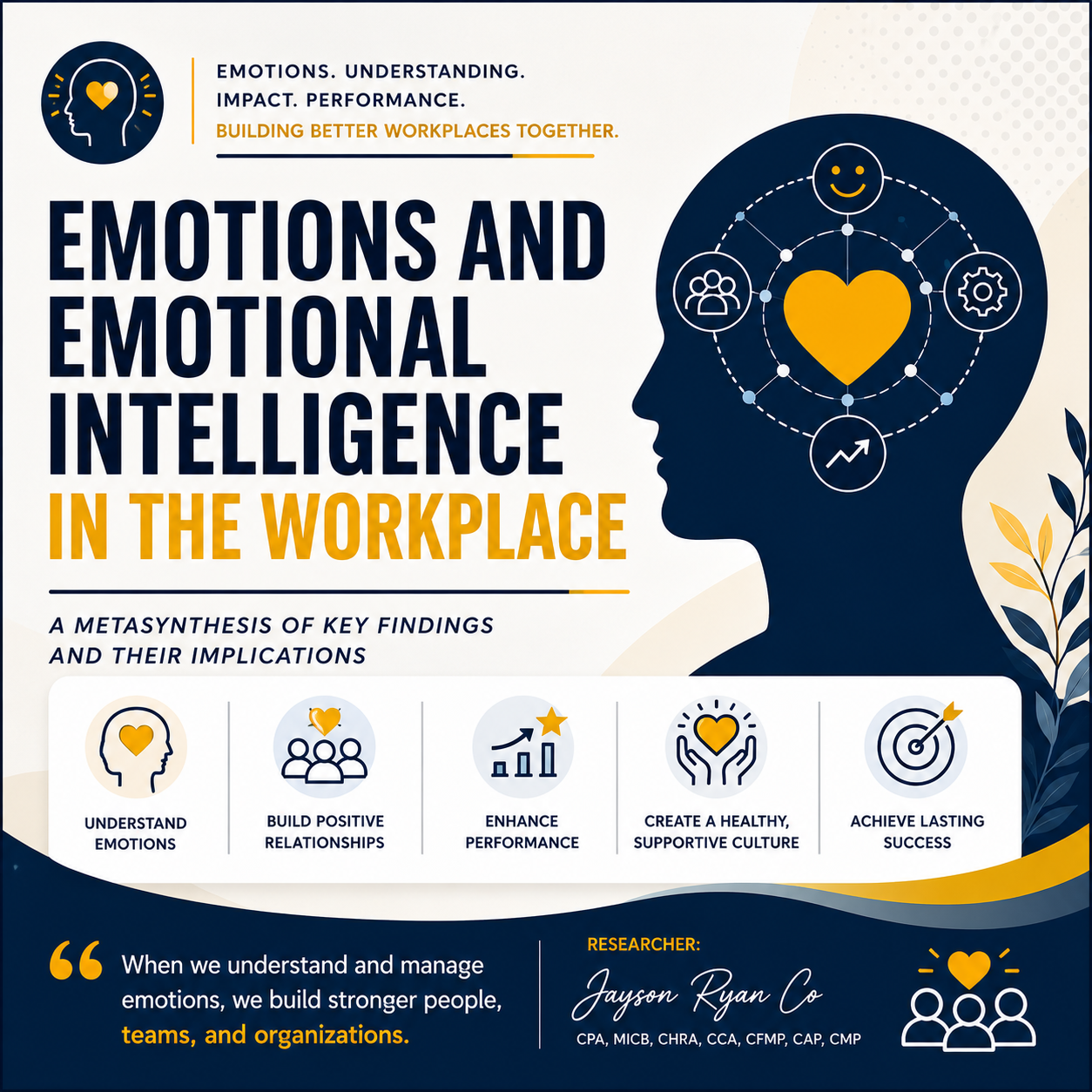
This metasynthesis integrates the findings of Schutte and Loi (2014), Connections between Emotional Intelligence and Workplace Flourishing, and Ashkanasy and Dorris (2017), Emotions in the Workplace. Together they demonstrate that emotions are fundamental to workplace functioning and employee flourishing. Schutte and Loi provide empirical evidence that emotional intelligence is positively associated with mental health, work engagement, workplace social support, and perceived power. Ashkanasy and Dorris provide a broader theoretical framework explaining how emotions operate across individual, interpersonal, team, leadership, and organizational levels. Synthesized, they suggest that emotional intelligence is an individual resource through which employees manage emotional experiences, build positive relationships, maintain a sense of control, and ultimately achieve greater workplace flourishing.
Introduction
The studies of Schutte and Loi (2014), Connections between Emotional Intelligence and Workplace Flourishing, and Ashkanasy and Dorris (2017), Emotions in the Workplace, collectively demonstrate that emotions are fundamental to workplace functioning and employee flourishing. Schutte and Loi provide empirical evidence that emotional intelligence is positively associated with mental health, work engagement, workplace social support, and perceived power. Ashkanasy and Dorris provide a broader theoretical framework explaining how emotions operate across individual, interpersonal, team, leadership, and organizational levels.
When synthesized, these studies suggest that emotional intelligence serves as an important individual resource through which employees manage emotional experiences, develop positive workplace relationships, maintain a sense of control, and ultimately achieve greater workplace flourishing.
1. Emotional Intelligence as a Foundation for Workplace Flourishing
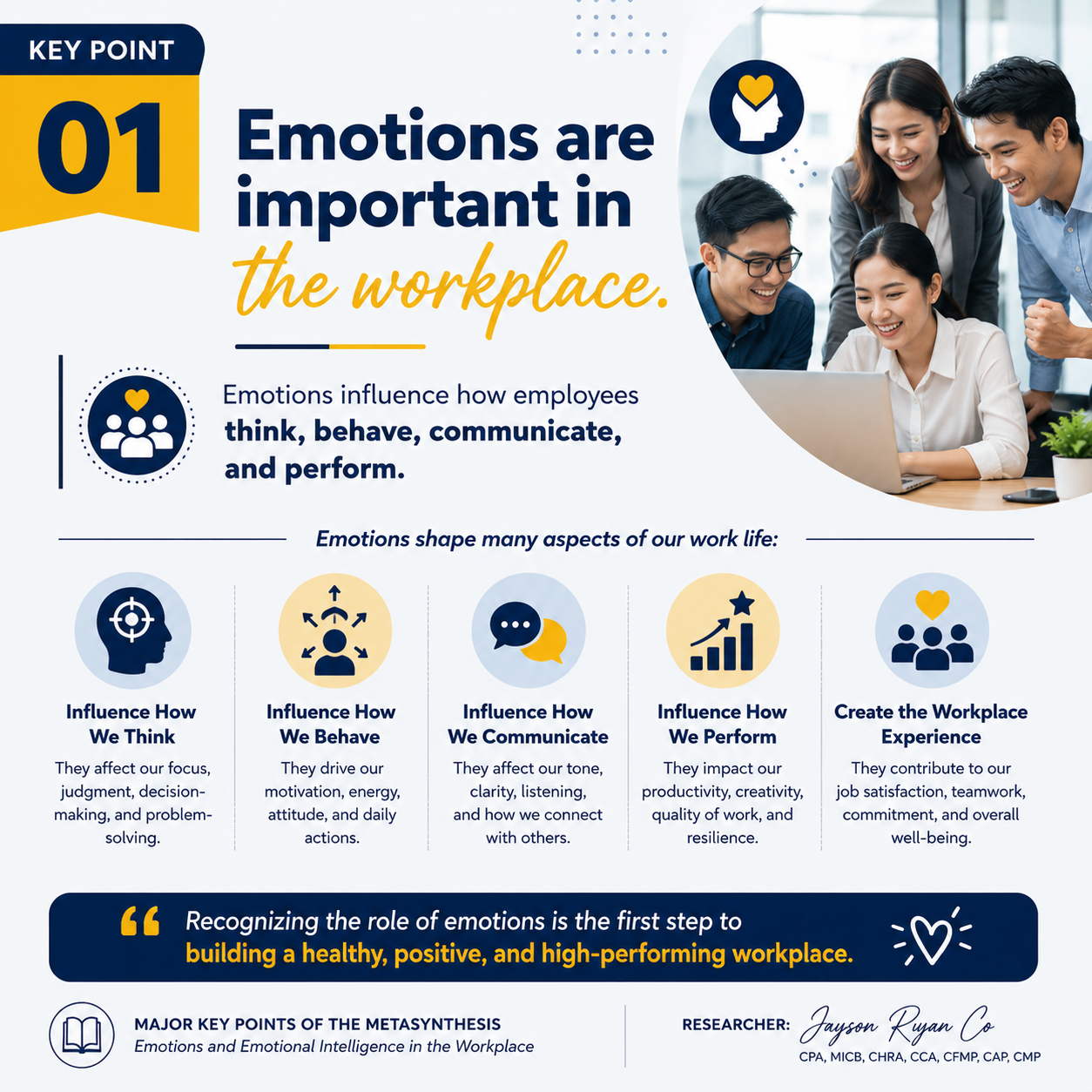
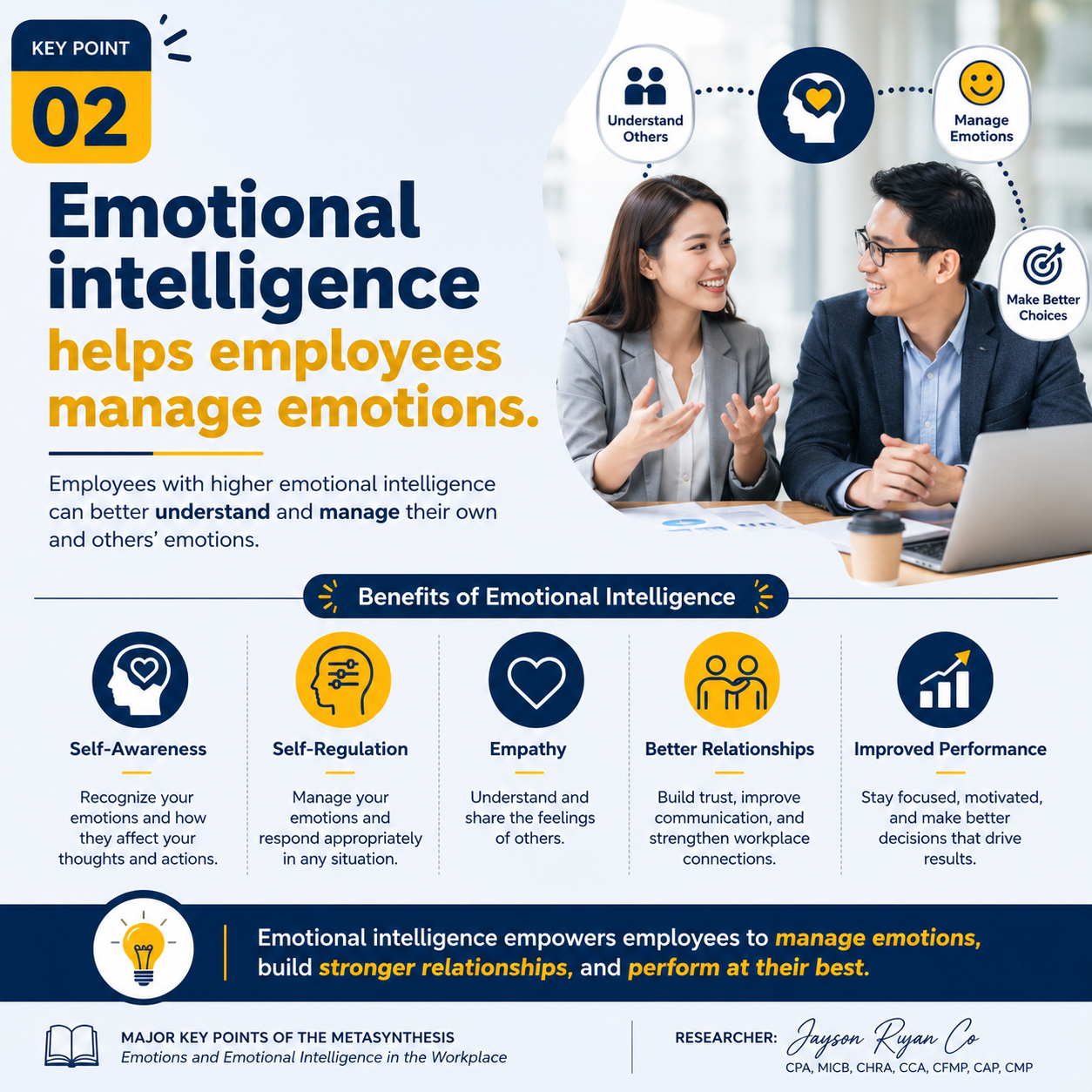
Schutte and Loi (2014) found that employees with higher emotional intelligence tend to experience better mental health and greater work engagement, which they used as indicators of workplace flourishing. Emotional intelligence involves the ability to perceive, understand, and manage emotions effectively in oneself and others. These capabilities allow employees to respond more adaptively to workplace challenges.
This finding is reinforced by Ashkanasy and Dorris (2017), who position emotional intelligence at the between-person level of their five-level model of workplace emotions. They describe emotional intelligence as an important individual difference associated with work performance, conflict resolution, leadership, and organizational climate. Together, the studies suggest that emotional intelligence can be viewed as an individual psychological resource that helps employees transform emotional experiences into constructive workplace behaviors: Emotional Intelligence → Effective Emotional Processing → Adaptive Responses → Well-being and Engagement.
2. Emotional Intelligence and Workplace Social Support
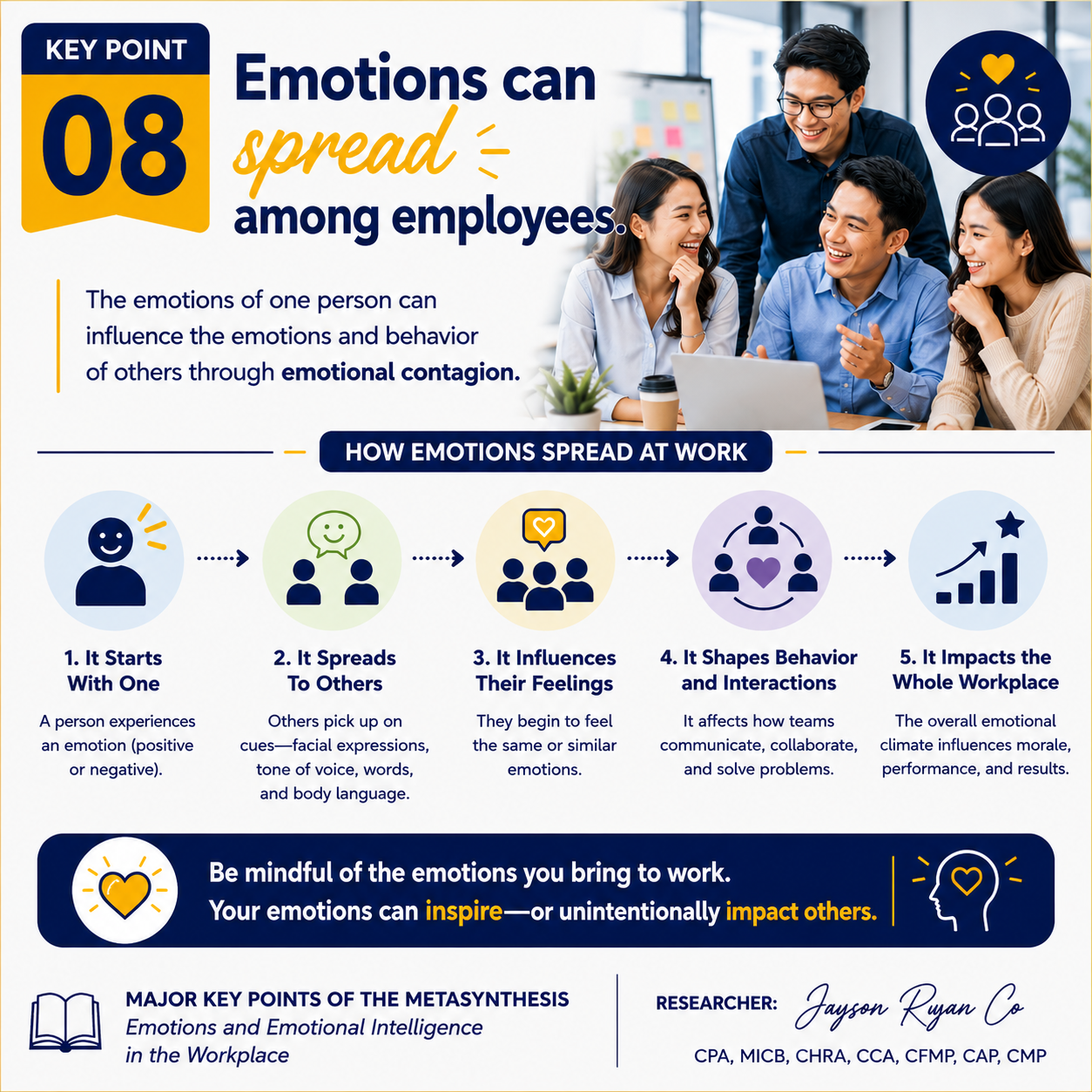
One of the most important findings of Schutte and Loi (2014) is that satisfaction with workplace social support mediates the relationship between emotional intelligence and workplace flourishing. This connects directly with Ashkanasy and Dorris’s (2017) discussion of interpersonal emotions: emotions are continuously communicated between employees through facial expressions, body language, tone of voice, and other forms of interaction.
Employees with stronger emotional intelligence may therefore be better able to understand coworkers’ emotions, communicate appropriately, manage interpersonal conflict, provide emotional support, develop positive relationships, and seek assistance when necessary. These abilities strengthen an employee’s social network within the organization. Emotional intelligence does not necessarily lead to flourishing in isolation — its effects operate through the quality of interpersonal relationships and social support: Emotional Intelligence → Better Emotional Communication → Stronger Relationships → Social Support → Workplace Flourishing.
3. Emotional Intelligence, Perceived Power, and Control
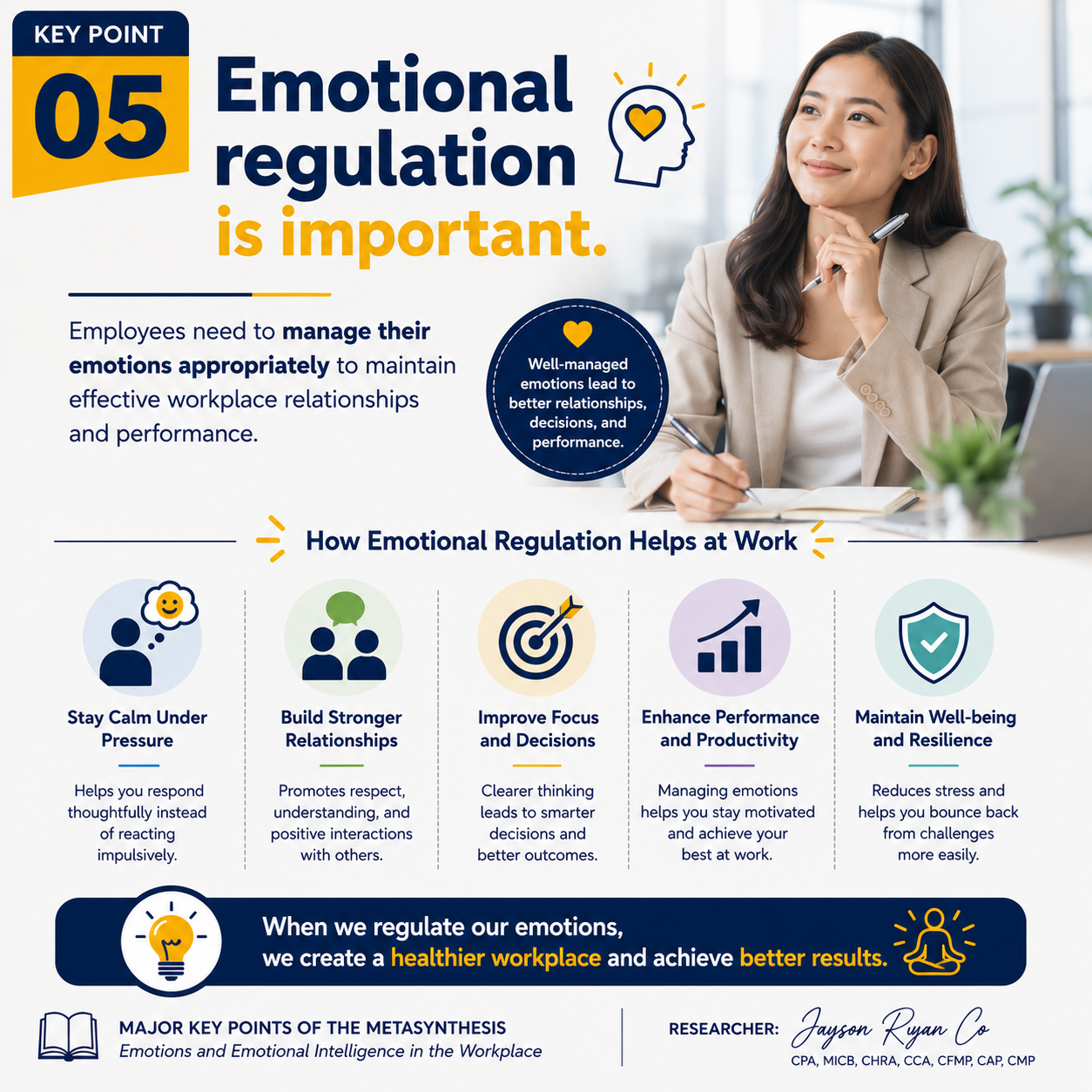
Schutte and Loi (2014) also found that greater emotional intelligence is associated with greater perceived power in the workplace — an employee’s sense of influence, autonomy, control, and ability to manage circumstances. This can be understood through Ashkanasy and Dorris’s (2017) discussion of emotional regulation and affective events. An employee who can recognize and regulate emotions may be better equipped to handle stressful situations, negotiate conflicts, communicate with supervisors, and make decisions.
Consequently, the employee may develop a stronger perception that they are capable of managing their environment: Emotional Intelligence → Emotional Regulation → Greater Perceived Control → Engagement and Well-being. This matters because workplace flourishing is not simply the presence of positive emotions — it also requires the resources and confidence to manage challenges effectively.
4. Workplace Emotions as Dynamic Processes
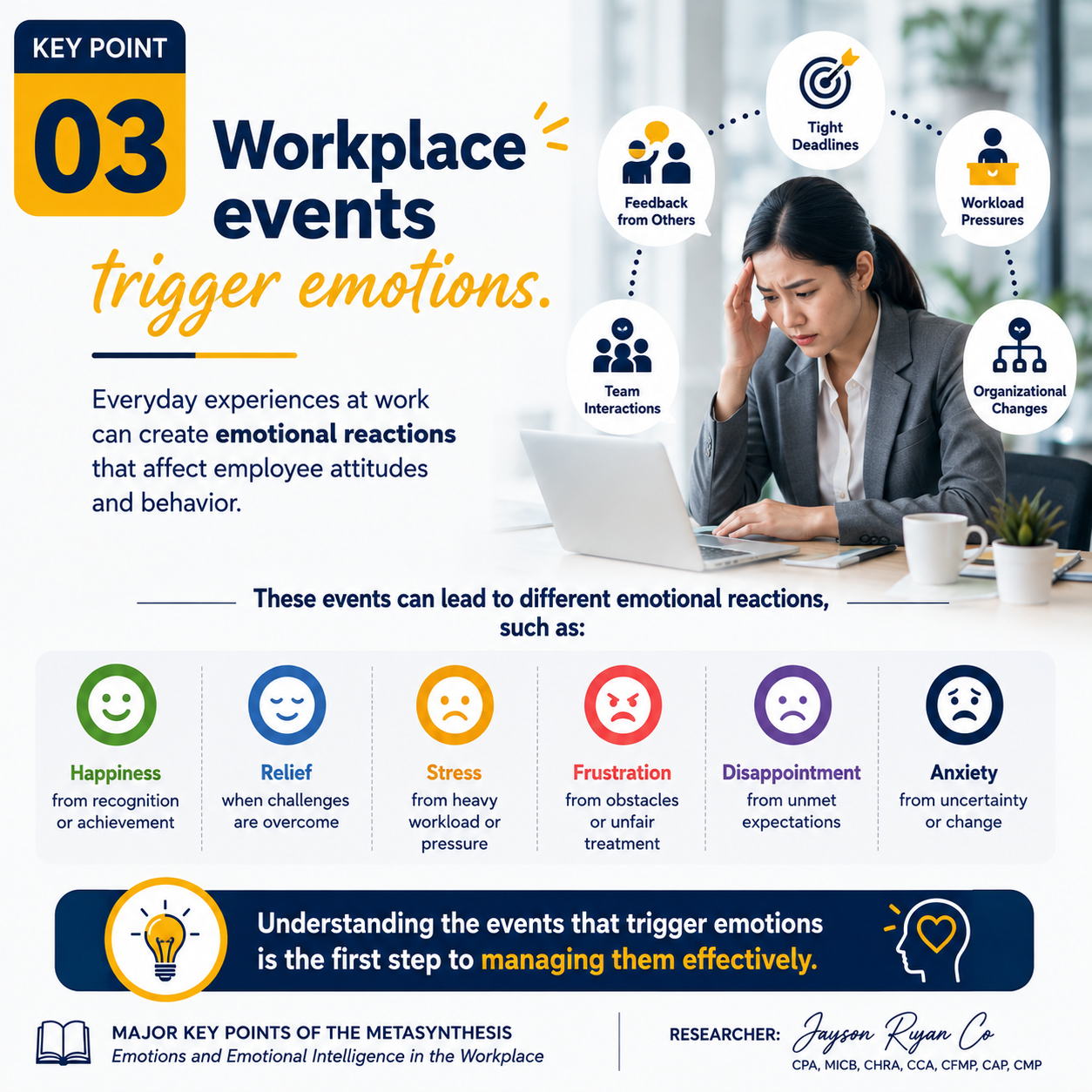
Ashkanasy and Dorris (2017) expand the findings of Schutte and Loi by emphasizing that workplace emotions are dynamic rather than static. Their discussion of Affective Events Theory (AET) suggests that workplace events trigger emotional reactions, which subsequently influence employee attitudes and behaviors: Workplace Event → Emotional Reaction → Appraisal → Behavior → Workplace Outcome.
For example, supportive feedback from a supervisor may produce positive emotions and increase engagement, while unfair treatment or conflict may produce frustration, anger, or fear and reduce well-being. Emotional intelligence becomes particularly important because it may determine how employees interpret and respond to these events. Flourishing does not mean experiencing only positive emotions — it involves the ability to respond constructively to both positive and negative experiences.
5. Emotional Intelligence Across Multiple Organizational Levels
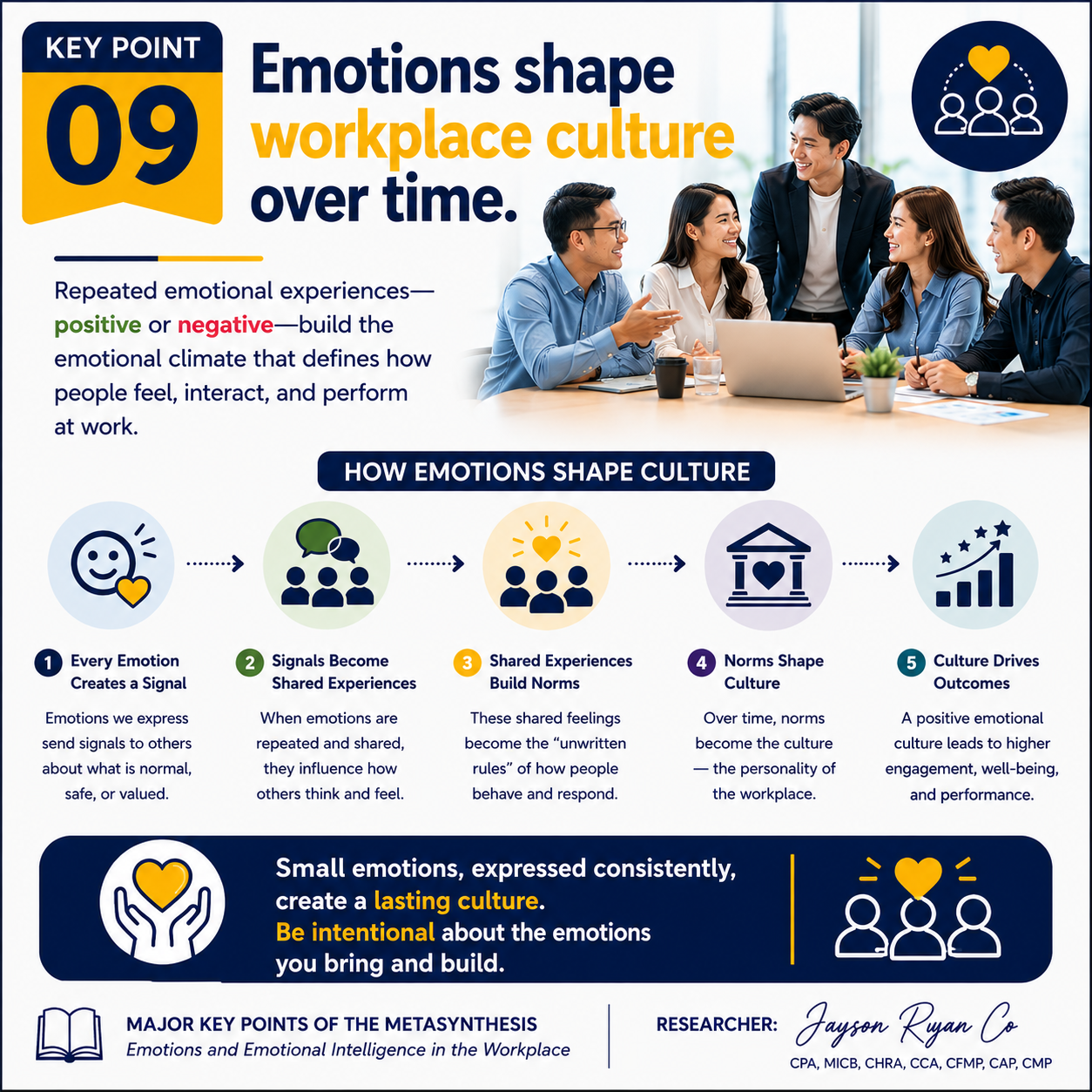
Ashkanasy and Dorris’s (2017) five-level framework extends Schutte and Loi’s individual-level findings. At the individual level, emotional intelligence and regulation contribute to mental health and resilience. At the interpersonal level, emotional perception and communication build social support and relationships. At the team level, emotional contagion and team dynamics drive cohesion and engagement. At the leadership level, emotionally intelligent leadership fuels motivation and performance. At the organizational level, emotional culture and climate sustain employee well-being.
This indicates that workplace flourishing is multilevel. An employee’s emotional intelligence begins as an individual capability, but its effects can extend to coworkers, teams, leaders, and eventually the broader organization.
6. Leadership and the Translation of Emotional Intelligence into Team Outcomes
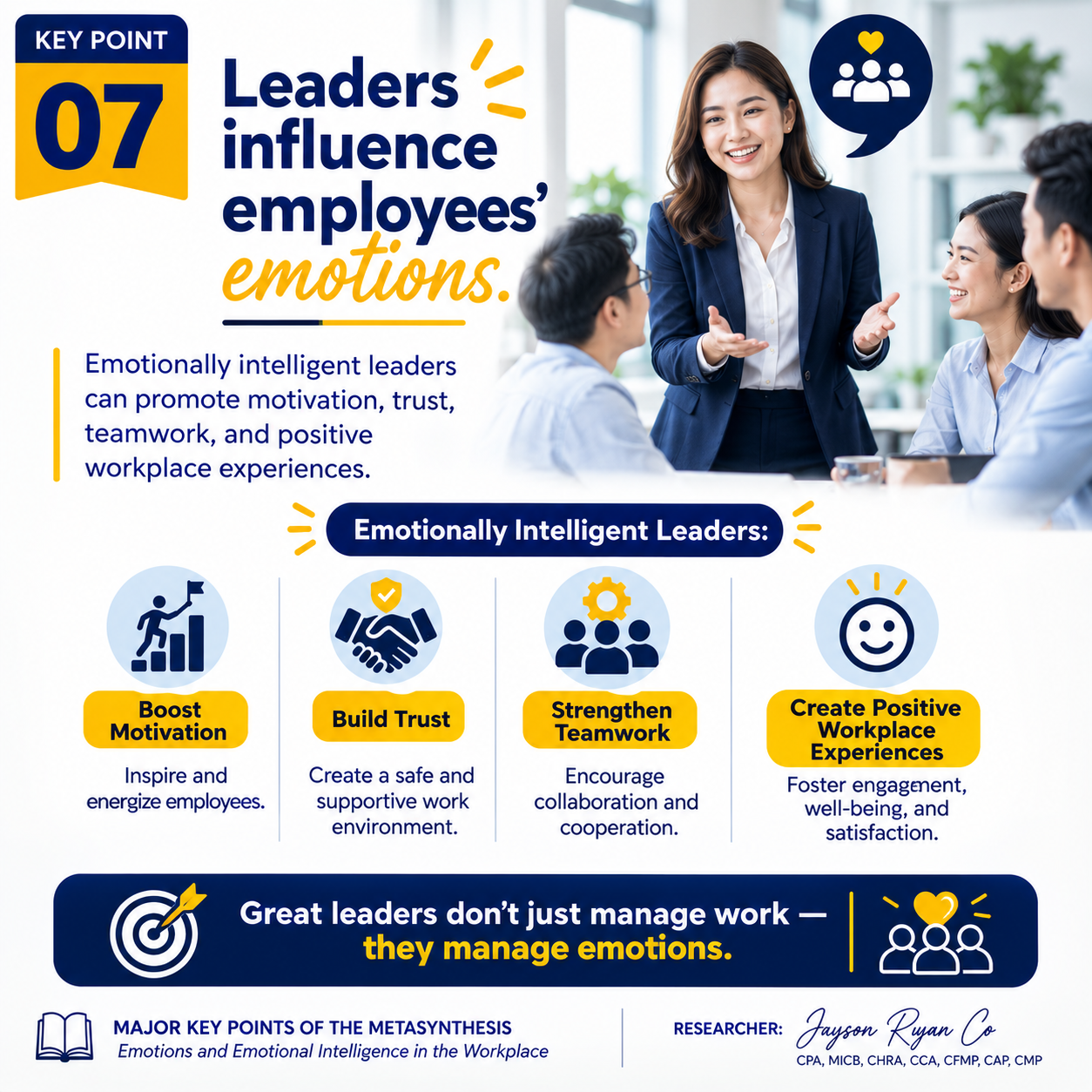
Both studies point to the importance of leadership. Schutte and Loi (2014) show that emotional intelligence is related to social support and perceived power; Ashkanasy and Dorris (2017) extend this to leadership and teams, explaining that leaders influence the emotional states of followers through emotional expression and contagion. Emotionally intelligent leaders influence employees through effective communication, appropriate emotional expression, conflict management, support during stress, recognition of employee emotions, and regulation of negative emotions.
Through emotional contagion, the emotions demonstrated by leaders spread throughout teams: Emotionally Intelligent Leadership → Positive Team Emotions → Stronger Relationships → Greater Engagement → Better Organizational Functioning. However, Ashkanasy and Dorris also identify a potential dark side of emotional intelligence — emotional abilities can be used to manipulate others — so emotional intelligence alone does not guarantee positive outcomes; ethical leadership and organizational context also matter.
7. Emotional Regulation Rather Than Constant Positivity
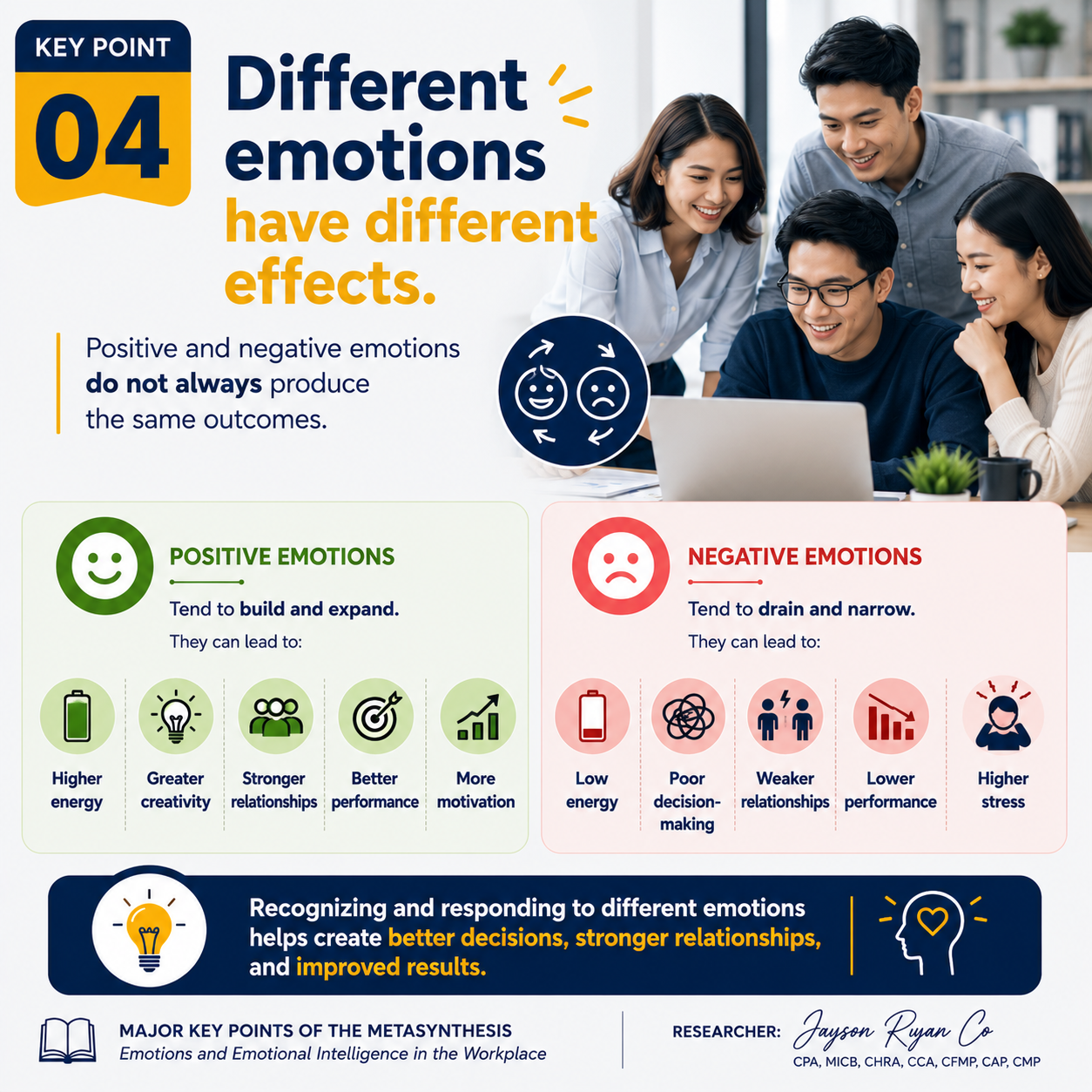
Workplace flourishing should not be understood as constantly feeling happy. Ashkanasy and Dorris (2017) explain that both positive and negative emotions serve useful functions. Positive emotions may promote creativity, cognitive flexibility, optimism, engagement, and cooperation. Certain negative emotions may promote persistence, careful evaluation, recognition of problems, and motivation to change undesirable conditions.
Emotional intelligence therefore allows employees to ask: What am I feeling? Why am I feeling it? What does this emotion tell me? How should I respond? This makes emotional regulation a central mechanism connecting emotional intelligence to flourishing. The objective is not to eliminate negative emotions, but to understand and manage them appropriately.
Integrated Metasynthesis Model
The two studies integrate into a single conceptual flow. Workplace events and organizational context shape employee emotional experiences. Emotional intelligence — perceiving, understanding, and regulating emotions — then produces adaptive emotional responses. These responses generate both social support (leading to positive relationships) and perceived power and control (leading to autonomy and confidence). Together these contribute to mental health and work engagement, which produce workplace flourishing.
At the same time, these individual outcomes influence the broader workplace: Workplace Flourishing → Positive Interactions → Team Emotional Climate → Leadership and Organizational Climate. This is a reciprocal and dynamic process rather than a simple one-directional relationship.
Overall Metasynthesis
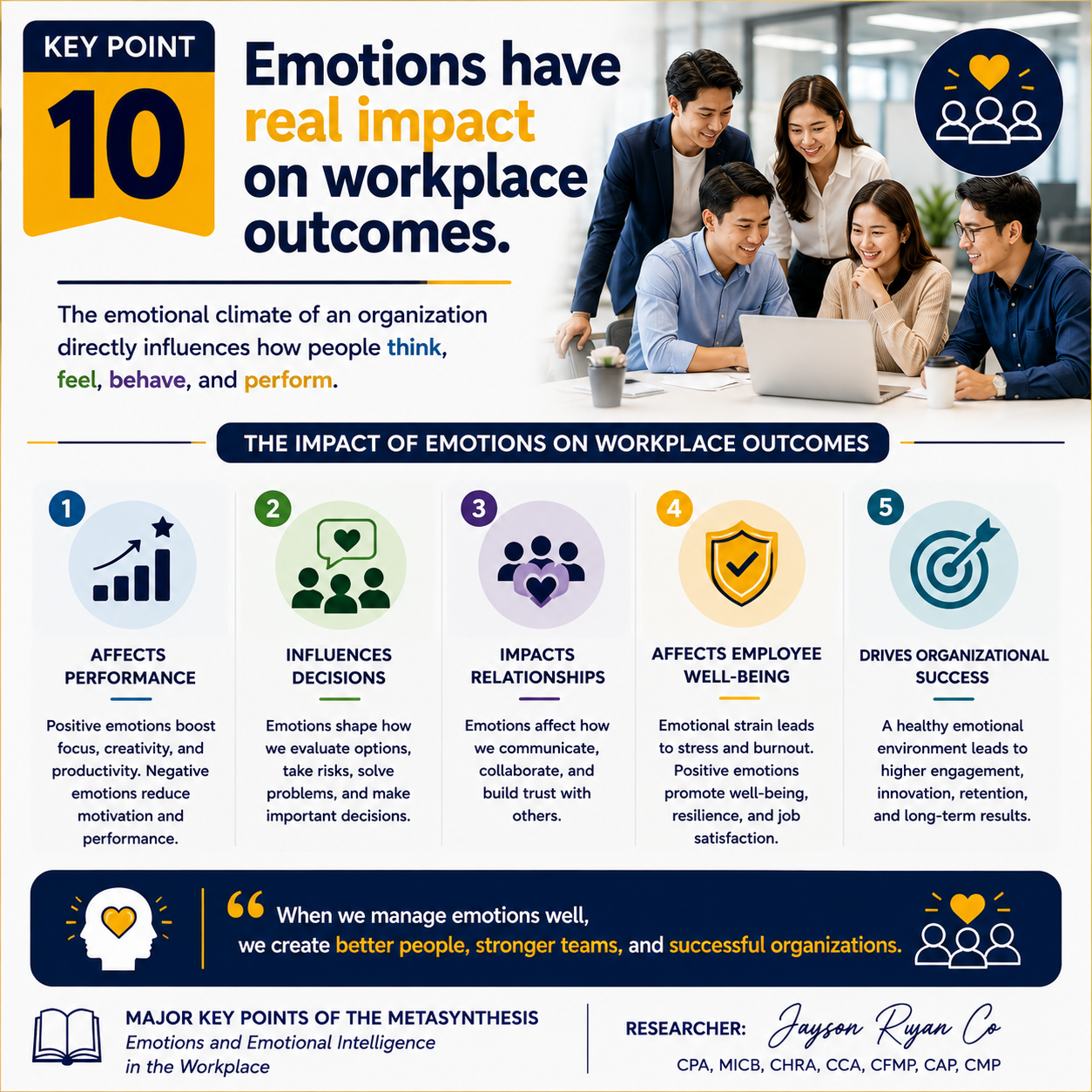
Taken together, Schutte and Loi (2014) and Ashkanasy and Dorris (2017) suggest that emotional intelligence is both an individual psychological capability and a relational resource embedded within a broader organizational emotional system. Schutte and Loi provide empirical evidence that emotional intelligence is directly and indirectly associated with workplace flourishing, particularly through social support and perceived power. Ashkanasy and Dorris provide the broader theory, demonstrating that workplace emotions operate across interconnected individual, interpersonal, team, leadership, and organizational levels.
The synthesis indicates that workplace flourishing emerges from the interaction between individual emotional competencies and the emotional environment of the organization. Emotional intelligence should not be viewed merely as an employee characteristic — it is a mechanism connecting individual emotional functioning with interpersonal relationships, leadership, team dynamics, and organizational climate.
Central Synthesis
Emotional intelligence enables employees to understand and regulate emotional experiences; this facilitates stronger social support, greater perceived control, healthier interpersonal interactions, and adaptive responses to workplace events, which collectively contribute to mental health, work engagement, and workplace flourishing. These individual processes are further reinforced or constrained by team leadership, emotional contagion, and organizational emotional climate.
Research Gap and Implications
The synthesis also reveals an important research gap. Schutte and Loi (2014) primarily examine relationships at the individual level, while Ashkanasy and Dorris (2017) emphasize a multilevel perspective. Future research could therefore move beyond asking “Does emotional intelligence make employees flourish?” to “How and under what workplace conditions does emotional intelligence contribute to employee flourishing?” — examining the interaction of Emotional Intelligence + Leadership + Social Support + Emotional Climate + Workplace Events → Workplace Flourishing.
Such an approach would provide a stronger foundation for developing emotional intelligence training, leadership development programs, supportive workplace practices, and organizational policies aimed not only at improving performance but also at promoting sustainable employee well-being and organizational flourishing.
References
Ashkanasy, N. M., & Dorris, A. D. (2017). Emotions in the workplace. Annual Review of Organizational Psychology and Organizational Behavior, 4, 67–90.
Ashkanasy, N. M. (2003). Emotions in organizations: A multilevel perspective. In F. Dansereau & F. J. Yammarino (Eds.), Research in multilevel issues (Vol. 2, pp. 9–54). Elsevier.
Ashkanasy, N. M., & Daus, C. S. (2005). Rumors of the death of emotional intelligence in organizational behavior are vastly exaggerated. Journal of Organizational Behavior, 26(4), 441–452.
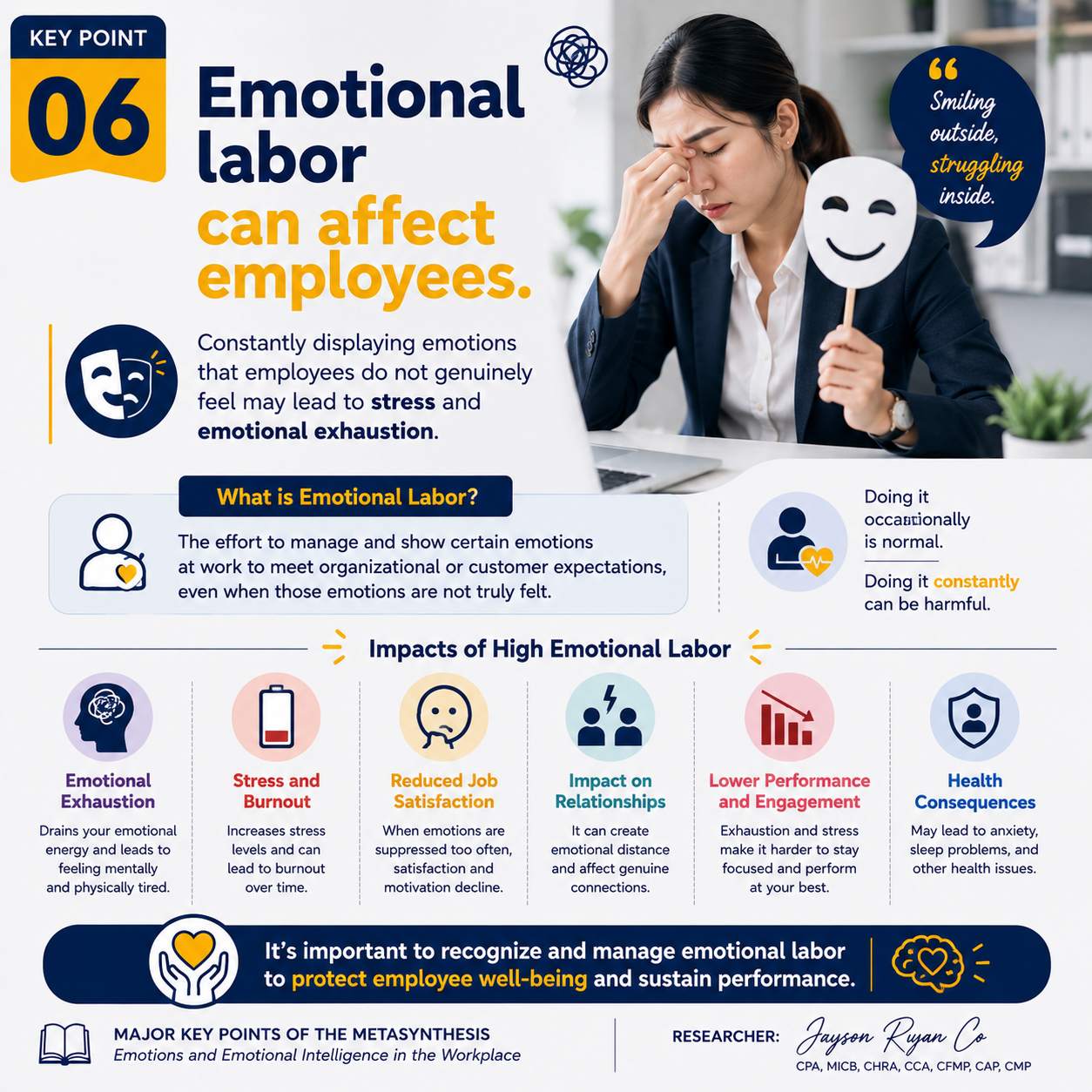
Ashforth, B. E., & Humphrey, R. H. (1993). Emotional labor in service roles: The influence of identity. Academy of Management Review, 18(1), 88–115. Ashforth, B. E., & Humphrey, R. H. (1995). Emotion in the workplace: A reappraisal. Human Relations, 48(2), 97–125.
Grandey, A. A. (2000). Emotion regulation in the workplace: A new way to conceptualize emotional labor. Journal of Occupational Health Psychology, 5(1), 95–110. Weiss, H. M., & Cropanzano, R. (1996). Affective events theory. In B. M. Staw & L. L. Cummings (Eds.), Research in organizational behavior (Vol. 18, pp. 1–74). JAI Press.
10 Key Points of the Metasynthesis
Published by
Jayson Ryan P. Co, CPA, MICB, CHRA, CCA, CFMP, CAP, CMP, CMHT, CEMT, CFWT